Designing a local delivery marketplace: lessons from Dellvit
A delivery app has to earn trust from customers, outlets and riders at once. These are the decisions behind Dellvit.
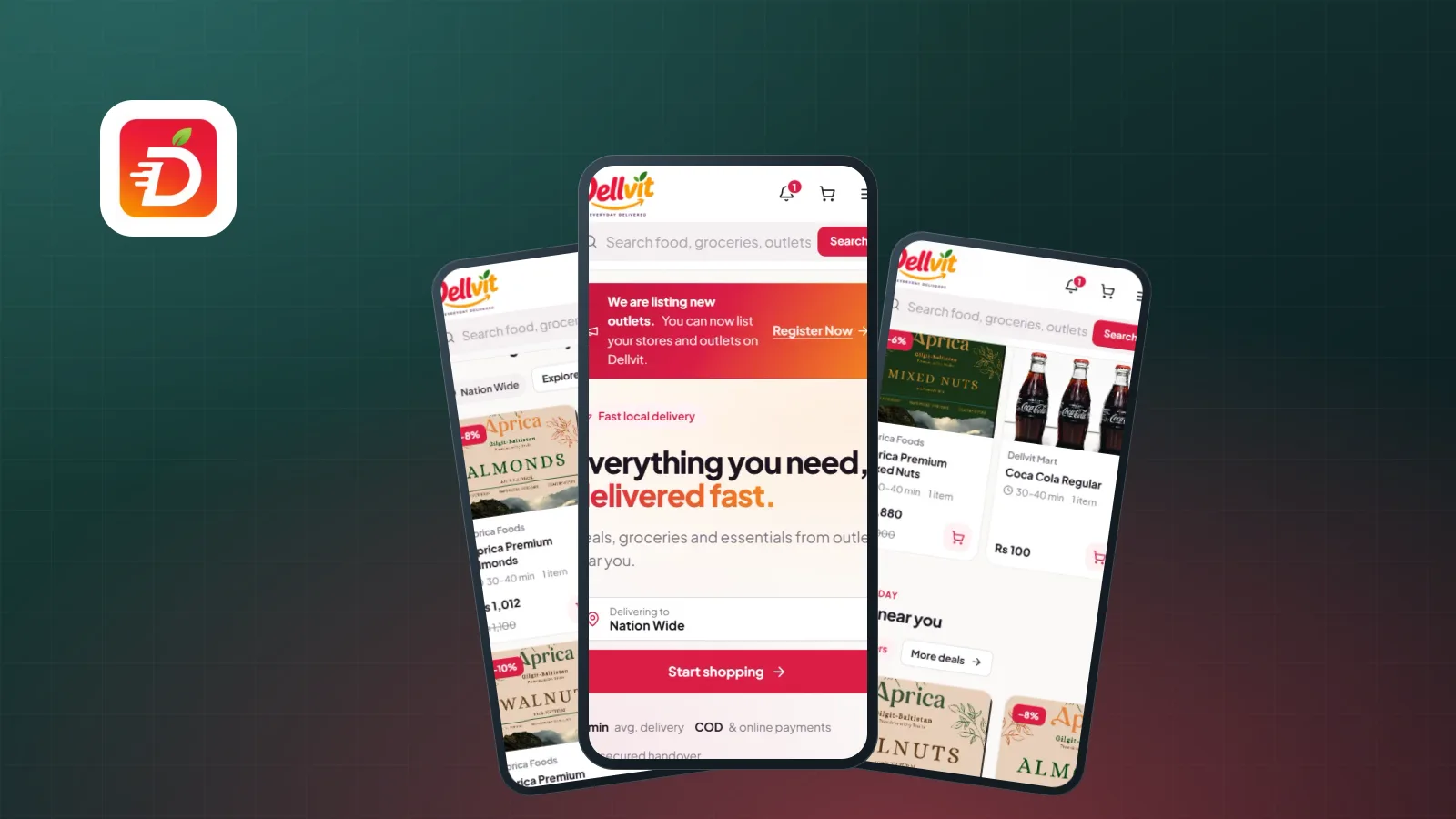
Dellvit is a local delivery marketplace for meals, groceries and everyday essentials. Customers order from outlets near them and get it delivered, usually in about half an hour. You can see it at dellvit.com.
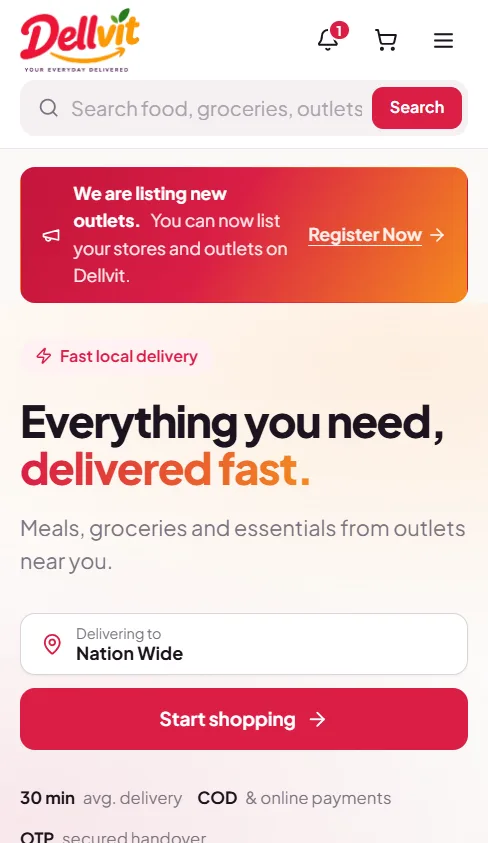
A marketplace like this has three groups of people to look after: customers, outlets and riders. Each design decision below came from asking what each of them needs to trust the platform.
Start with location
The first thing a customer does is set where they are. Everything after that, the outlets, the categories and the deals, is filtered to what can actually reach them. Showing a shop that cannot deliver to you is the fastest way to lose a customer, so location comes before browsing.
Make the cart familiar
Product cards show the outlet, the price, any discount and an estimated delivery time, with an add to cart button right on the card. Categories such as fruits, dry fruits and general store items keep the catalogue easy to scan on a small screen, and search covers food, groceries and outlets in one box.
Offer the payment people actually use
In many places cash is still the default, so Dellvit supports cash on delivery alongside online payment. Customers choose at checkout. Forcing card payment would cut out a large share of buyers.
Verify the handover
Every order ends with an OTP secured handover: the customer shares a one time code with the rider at the door. It confirms the right person received the order, protects riders from disputes and gives customers confidence that their order will not be left with someone else.
Let outlets grow the catalogue
Outlets can register and list their stores and products themselves. That keeps the catalogue growing without a central team entering every item, and a banner on the home page invites new outlets to join.
Fast on mobile data
Most orders come from phones, often on mobile data. Dellvit is built with Next.js, with pages rendered and cached on the server, so they load quickly and can also be found on Google. The layout is mobile first, with a light and a dark theme.
The takeaway
Clear pricing, a familiar payment option and a verified handover do more for a delivery marketplace than any feature list. If you are planning one, see our marketplace development service.